How Standard Aircraft Linked Elizabeth to Early Aviation
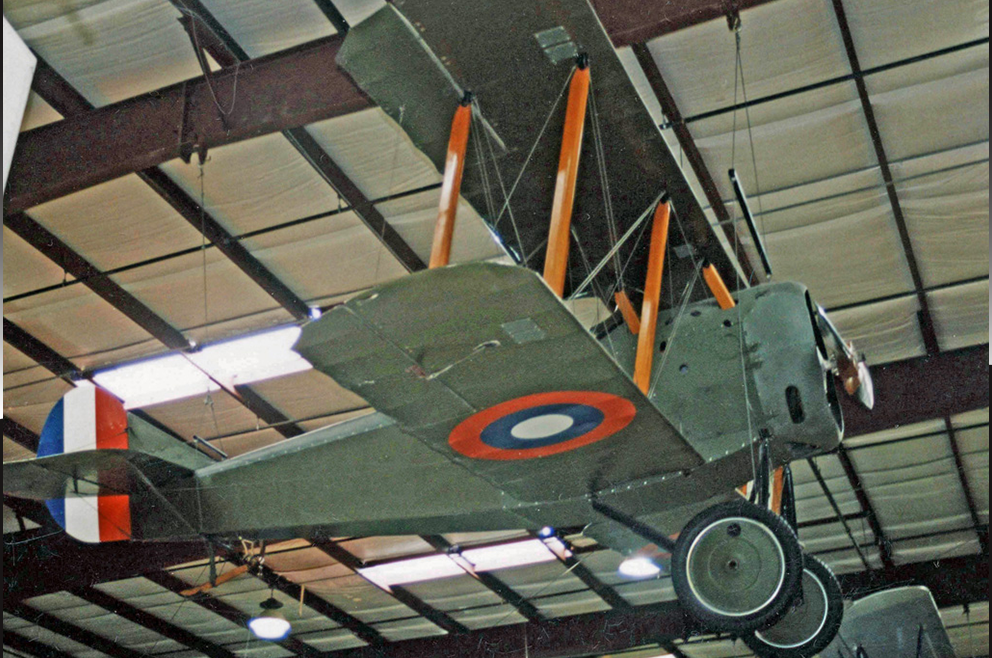
Standard E-1
Standard E-1 advanced training biplane of 1919 displayed at the Virginia Aviation Museum in USAAS markings
The GoElizabethNJ Archives
Original historical research commissioned by GoElizabethNJ, an initiative of the Elizabeth Destination Marketing Organization (EDMO). Research contribution by David Hart, Historic Research & Curatorial Intern.
Before aviation became routine, Elizabeth was already tied to the early age of flight. Standard Aircraft Corporation connected the city to wartime manufacturing, pilot training, and the early development of airmail, placing Elizabeth inside one of the most important technological shifts of the early twentieth century.
The Standard Aircraft Corporation of Plainfield, New Jersey started in 1916 in response to the likelihood of American involvement in the First World War. Shortly after establishment, the Standard Aircraft Corporation acquired the John Stephenson Car Works in Elizabeth, who were using the plant to produce horsecars and streetcars until their acquisition. During the War, workers were making as much as two or three times more than the state’s average wage. Women who sewed wings were making $25 per week which is approximately $615 today. The company promised to make as many as 60 planes a week during the war.
The Standard Aircraft Corporation was notable for producing two planes during their short time in business: the JR-1B and the American variant of the Handley Page O/400, however they also produced the Standard J airframe the JR-1B was based on. The Standard J and a few of its variants were used as training craft for the U.S. Army during the first World War. After the War, the Standard J’s were converted for use in the private sector, including Sikorsky buying a few models to use as their own training planes.
The JR-1B was one of the first models of airplane used by the USPS for airmail while the latter was a bomber used by the British and the Americans during the War. Only 6 JR-1B’s were built, the USPS had decided to go forward with a de Havilland model for the airmail service instead. Handley Page bombers however served throughout the First World War.
Standard Aircraft Corporation ceased operations in 1920. In 1927, some remnants of the company reorganized as the New Standard Aircraft Company, who were in operation from 1927-1931. The new company built the New Standard D-25 biplane mail carrier, however the Great Depression claimed another company. Ivan R. Gates, the co-founder committed suicide one year after the company went bankrupt. Today, Standard Aircraft Corporation is primarily remembered for the Standard J and their contributions to the development of Airmail.
Frequently Asked Questions
What was Standard Aircraft Corporation?
Standard Aircraft Corporation was a New Jersey aircraft manufacturer founded in 1916. It became tied to Elizabeth after acquiring the John Stephenson Car Works plant and helped connect the city to early aviation manufacturing.
Did Elizabeth manufacture airplanes during World War I?
Yes. Standard Aircraft used its Elizabeth plant to support wartime airplane production during the First World War.
What was the Standard J aircraft?
The Standard J was a training aircraft used by the U.S. Army during World War I. After the war, some of these planes were converted for private-sector use.
What was the JR-1B?
The JR-1B was one of the early airplane models used by the USPS for airmail service. Only a small number were built before the service moved on to another aircraft model.
How does this connect Elizabeth to airmail history?
Because Standard Aircraft’s work in Elizabeth was tied to the JR-1B, one of the early aircraft used in the development of U.S. airmail service.
What happened to Standard Aircraft Corporation?
The company ceased operations in 1920. Some remnants later reorganized as the New Standard Aircraft Company, which also eventually failed during the Great Depression.
From the GoElizabethNJ Archives:
A growing body of original historical research commissioned by GoElizabethNJ, an initiative of the Elizabeth Destination Marketing Organization (EDMO). The Archives strengthens the Elizabeth at 250 timeline through verified research, archival documentation, and scholarly contributions.
Experience This History in Person