Bicycles, Clubs, and the Bike Boom in Elizabeth

The GoElizabethNJ Archives
Original historical research commissioned by GoElizabethNJ, an initiative of the Elizabeth Destination Marketing Organization (EDMO). Research contribution by David Hart, Historic Research & Curatorial Intern.
Before bicycles became everyday objects, they were part of a cultural craze — and Elizabeth was in the thick of it. During the bike boom of the 1890s, cycling clubs, races, parades, and community rides helped make the bicycle part of the city’s sporting life, social life, and public identity.
Many inventions take time to make an impact. The bicycle was not one of them. Once the bicycle became practical, it quickly moved from novelty to necessity, sport, and status symbol. During the final decades of the nineteenth century, the United States experienced what became known as the “bike boom,” and Elizabeth was part of it.
The bicycle had existed in crude or experimental forms earlier in the century, but improvements in engineering made it far more attractive to riders by the 1880s and 1890s. The development of the “safety bicycle,” with two equal-sized wheels and a chain-driven rear wheel, made cycling more accessible and less dangerous than earlier high-wheel models. As bicycles became easier to use, they also became more desirable.
In Elizabeth, bicycles became part of local sporting culture and everyday public life. Athletic clubs and cycling enthusiasts helped make riding visible through races, public rides, and club activity. The bicycle was not simply a machine; it was part of a broader social experience that blended recreation, technology, competition, and public display.
By the 1890s, cycling clubs were active in and around Elizabeth, and bicycles had become a recognizable part of the city’s recreational culture. Organized rides, athletic events, and public displays made cycling something people saw, discussed, and participated in. The bicycle craze was not confined to one social class, but ownership still carried an element of status. A bicycle was useful, but it was also fashionable.
Elizabeth had its own connection to bicycle manufacturing and retail through the Carteret bicycle. One source cited in this research notes that the Carteret sold for seventy-five dollars, while many bicycles in the 1890s sold for around fifty dollars. That price difference suggests that the Carteret occupied a somewhat elevated position in the market, whether because of quality, branding, or local appeal.
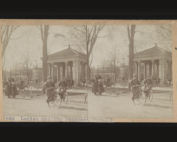
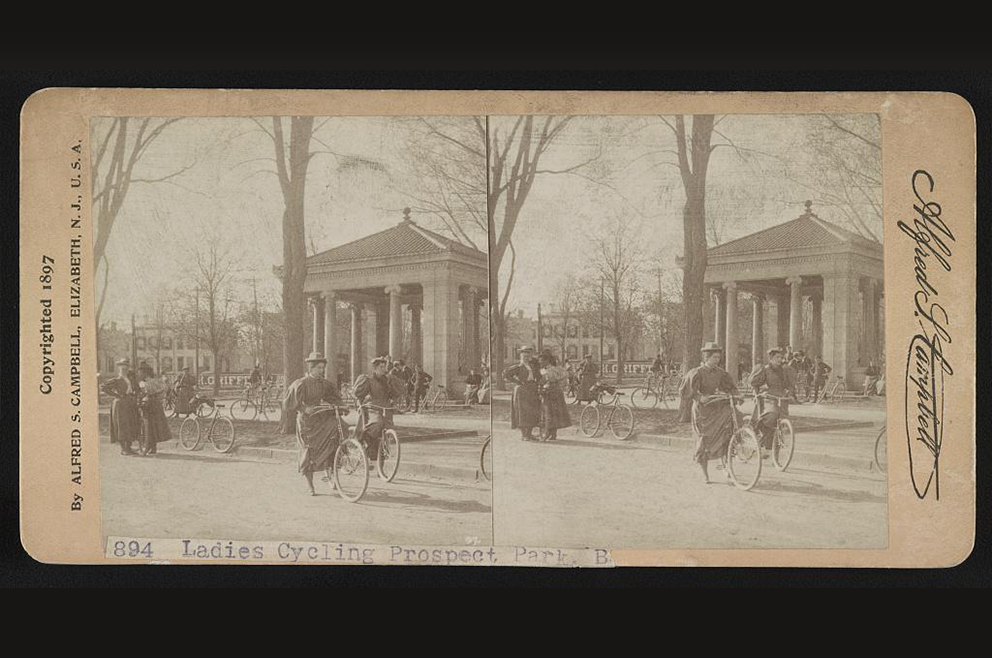
The bicycle also became part of changing public conversations about gender and mobility. For women, the ability to ride comfortably required practical adjustments to clothing. Bloomers and split skirts became associated with female cyclists because they allowed women to ride more freely than traditional dress permitted. In this way, the bicycle became linked not just to transportation or leisure, but to broader changes in how women moved through public space.
Elizabeth’s bicycle culture reflected these wider trends. What may seem ordinary now was once a visible marker of modernity, freedom, recreation, and public identity. Cycling events brought people together. Clubs helped organize activity and build community. The bicycle became part of the rhythm of city life during a period when Elizabeth, like many American cities, was growing and changing rapidly.
The bike boom eventually faded, but its cultural impact remained. The bicycle helped reshape leisure, public recreation, and mobility in the late nineteenth century. In Elizabeth, it left behind a record of clubs, events, local models, and civic participation that helps us understand how national trends became local experiences.
Frequently Asked Questions
What was the bike boom?
The bike boom was the late nineteenth-century surge in bicycle popularity, especially in the 1880s and 1890s, when cycling became a major recreational and sporting trend.
Did Elizabeth have cycling clubs in the 1890s?
Yes. Elizabeth’s sporting and social life included cycling clubs, organized rides, races, and other public activities tied to the bicycle craze.
What was the Carteret bicycle?
The Carteret was a bicycle associated with Elizabeth and cited in this research as selling for seventy-five dollars, which placed it above the roughly fifty-dollar price of many bicycles in the 1890s.
Why were bicycles important to social life in Elizabeth?
Bicycles were tied to club culture, recreation, athletic competition, public rides, and community identity, making them part of everyday city life during the 1890s.
How did bicycles connect to women’s history?
Cycling encouraged more practical clothing such as bloomers and split skirts, and the bicycle has often been connected to broader changes in women’s mobility and independence in public life.
Does Elizabeth still celebrate bicycle culture today?
Yes. Elizabeth continues that connection through Tour de Elizabeth, an annual community bike ride that highlights the city’s neighborhoods, landmarks, and public spaces.
From the GoElizabethNJ Archives:
A growing body of original historical research commissioned by GoElizabethNJ, an initiative of the Elizabeth Destination Marketing Organization (EDMO). The Archives strengthens the Elizabeth at 250 timeline through verified research, archival documentation, and scholarly contributions.
Experience This History in Person